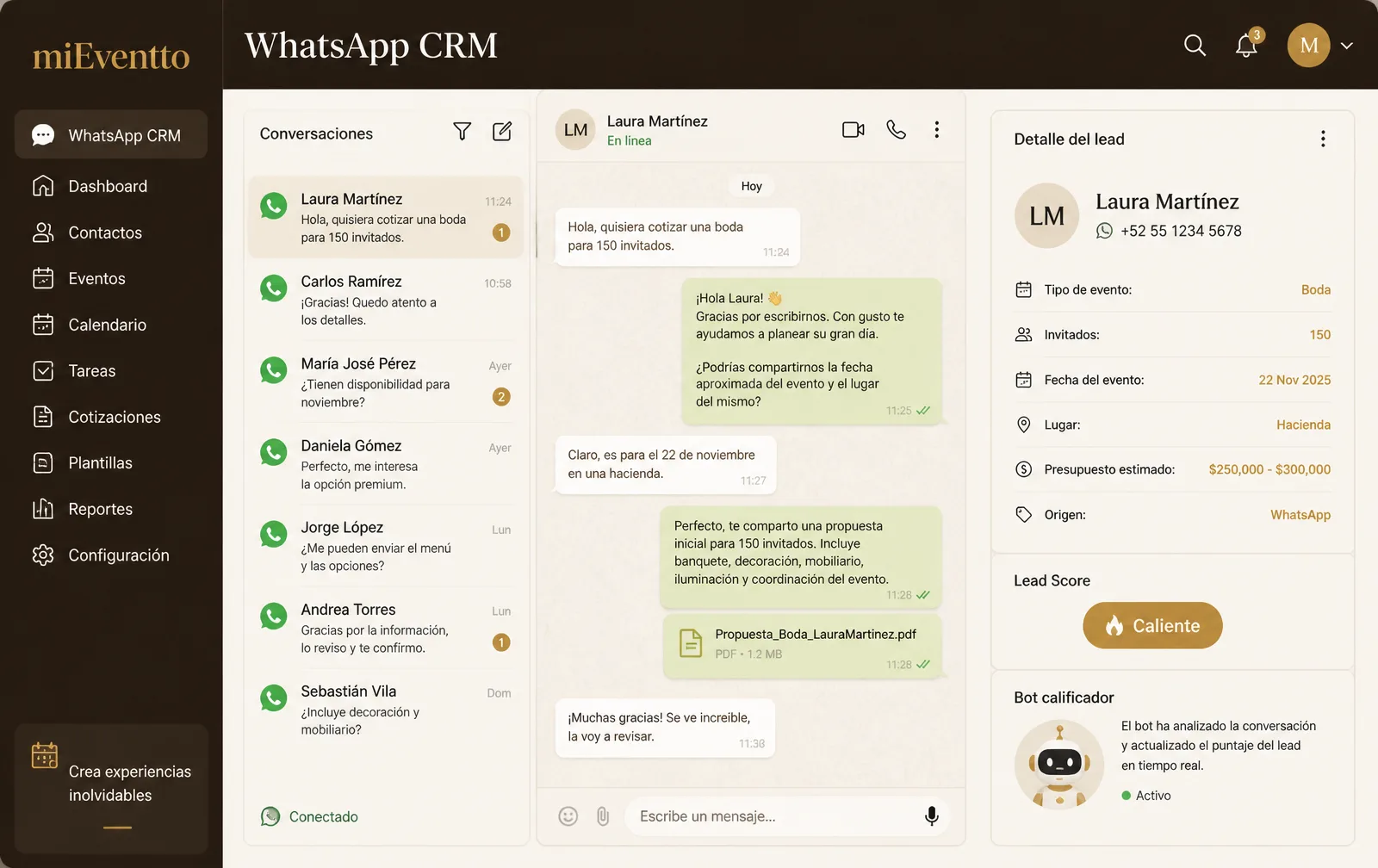
The miEventto blog exists for one specific reason: most event-planning content talks about inspiration, décor and trends, yet almost nobody explains how to run the business behind an event. We write for the person who quotes, negotiates with vendors, pays the staff, invoices deposits and chases balances. In other words, for whoever keeps the operation alive after the last guest leaves and the money still has to be collected.
Every article comes from real cases: event agencies, catering companies, wedding planners, production houses and rental firms across Mexico and Latin America. We do not publish generic listicles. When we discuss margins we give percentages, when we discuss collections we give payment terms, and when we discuss software we explain exactly what gets automated and what remains human work. If we have not seen it work in a real operation, we do not recommend it.
You can read the articles in any order, but we grouped them by topic so you can quickly find what matches your current stage: quoting better, organizing your CRM, controlling event-day operations, or professionalizing your finances.
Quoting and profitability
Most profitability problems in an event agency start at the quote, not at execution. A miscalculated margin, a forgotten line item or an expiration date nobody enforced turns, three months later, into an event you worked for free. In this group we break the quoting process apart: how to capture the brief, how to separate direct from indirect costs, how much contingency to leave for setup surprises, and why margin should be applied per line item rather than as a global percentage at the end. We also cover how to standardize templates so anyone on the team can issue a proposal with the same level of detail and your own letterhead, instead of depending on a single spreadsheet living on one laptop.
CRM and sales follow-up
Agencies lose more money to weak follow-up than to a lack of leads. The quote sent on a Tuesday that nobody touched again, the repeat client who was never offered the next event, the contact stuck in the personal WhatsApp of someone who no longer works with you: that is revenue that existed and evaporated. Here we explain how to build a realistic event CRM, with stages that mirror how a corporate buyer or a couple actually decides, automatic reminders, and a per-client history that survives team turnover. We also cover how to split accounts between salespeople without internal fights and how to measure close rates by event type.
Event operations and logistics
Event day is not won with talent, it is won with checklists. This group covers the least glamorous and most decisive part: service orders, staff lists with ID and social-security data, tracking furniture in and out of the warehouse, delivery routes, setup and teardown schedules and clear owners per area. A well-documented event can be repeated; one that only existed in the coordinator's head must be reinvented every time. We also cover photographic evidence of setup and equipment return, which prevents expensive arguments with clients and vendors when something comes back damaged.
Finance, collections and growth
Invoicing is not collecting. Plenty of event companies show healthy margins on paper and unhealthy cash flow in reality, because the deposit arrived late, the balance was paid at 60 days and the staff payroll did not wait. This group covers deposit and balance policies, vendor payment calendars, sales commissions, payment reconciliation and which indicators to review monthly to know whether the agency is actually growing or just busier. We also discuss when it makes sense to leave spreadsheets behind and what to realistically expect from that migration in the first weeks.
If you want to apply what you read, miEventto is where all of it lives together: quotes with margins, client CRM, contracts, staff, inventory, collections and reports in a single account. You can start a 30-day free trial without a credit card and load one real event to see how it behaves with your own numbers.
Missing a topic? Write to us and we will consider it for upcoming articles. We publish new content every month and refresh existing guides whenever market practice changes or the product adds relevant capabilities.